Sermon on Zacchaeus – Luke 19:1-10
Jesus said to him, “Today salvation has come to this house, because he…

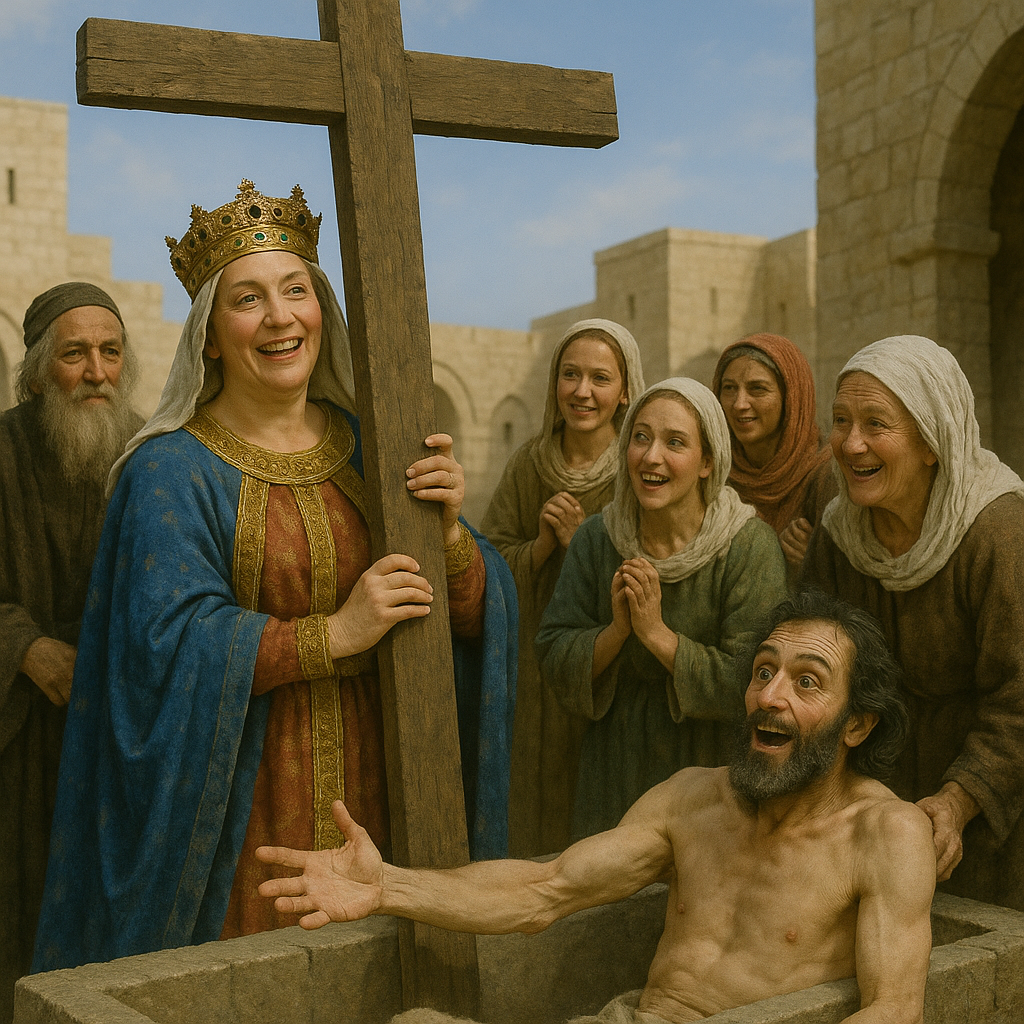
This three day feast commemorates the appearance of the sign of the Cross in the sky when Constantine was in conflict with the intruder, Maxentius. And it also commemorates the discover of the cross in Jerusalem by the Empress Helena, his mother.
In the early 4th century, the Roman Empire was divided and plagued by civil wars. Constantine, son of Constantius Chlorus, rose as a contender for supreme power. On the eve of the decisive Battle of the Milvian Bridge in 312 CE against Maxentius, Constantine is said to have witnessed a miraculous sign. According to Eusebius and Lactantius, he either saw a vision of the cross in the sky accompanied by the words “In this sign, conquer” (Latin: In hoc signo vinces) or was instructed in a dream to mark his soldiers’ shields with the Christian Chi-Rho symbol. Encouraged, Constantine embraced this heavenly promise of victory. The following day, his army triumphed, securing him as ruler of the West. This moment marked a turning point in Roman history: Constantine credited the Christian God with his success and soon issued the Edict of Milan (313 CE), granting Christians freedom of worship and ending centuries of persecution.
Years later, Constantine’s mother, Empress Helena, undertook a pilgrimage to the Holy Land. Deeply devoted to the faith her son had favored, Helena sought to uncover sacred Christian relics. In Jerusalem, she ordered excavations near Golgotha, the site of Christ’s crucifixion. There, workers uncovered three wooden crosses. To determine which was the True Cross, tradition holds that a dying or dead man was touched with each one. Upon contact with the authentic Cross, he was miraculously restored. This discovery, around 326 CE, became central to Christian devotion, linking Constantine’s heavenly vision with Helena’s earthly confirmation of the power of the Cross.
St Mary and St Cyril Coptic Orthodox Church